Prediction markets gain momentum as traders' convictions outpace traditional polls
Emerging prediction platforms like Polymarket and Kalshi are transforming how we gauge future events, with financial stakes revealing deeper market conviction and challenging the dominance of tradi...
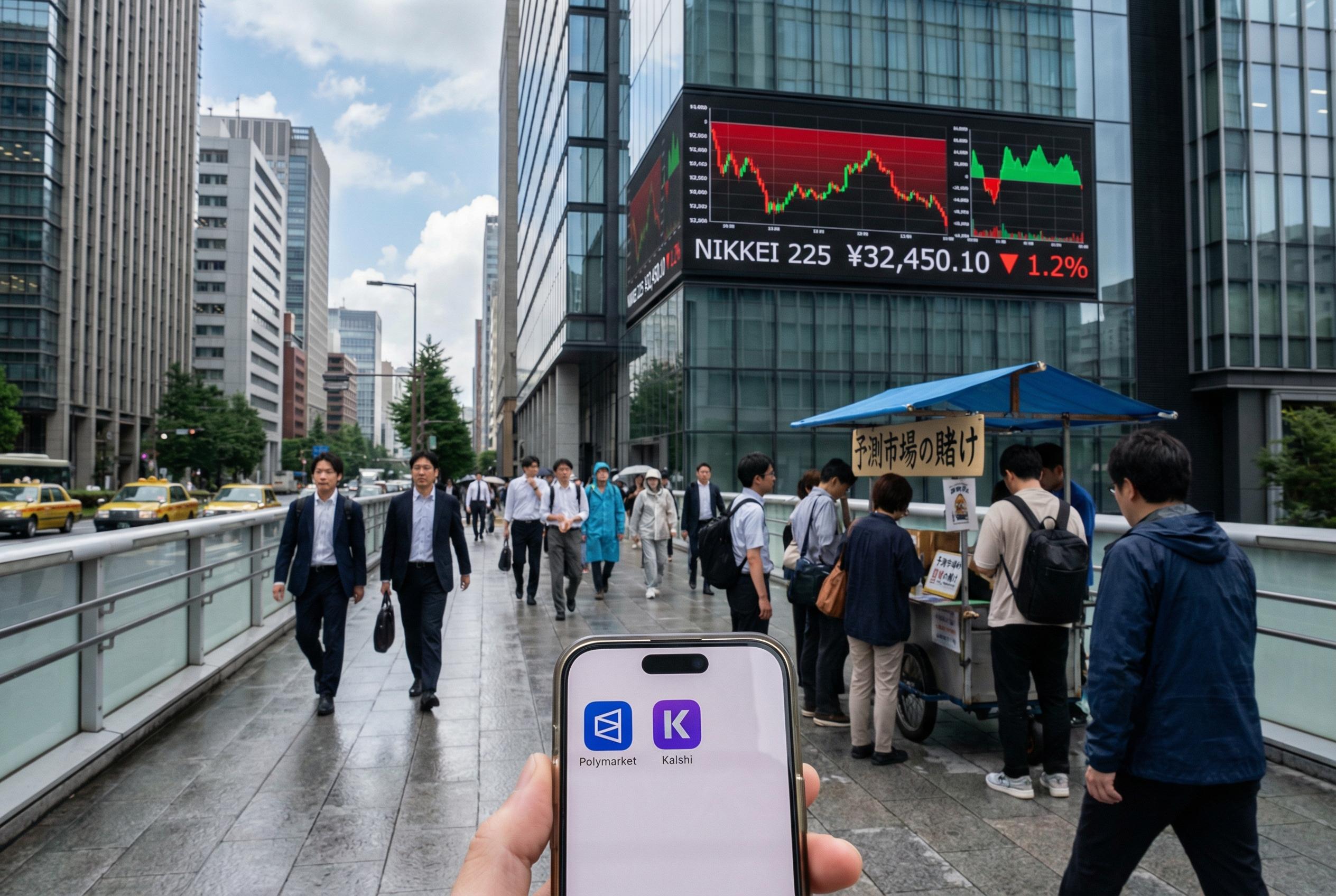
Emerging prediction platforms like Polymarket and Kalshi are transforming how we gauge future events, with financial stakes revealing deeper market conviction and challenging the dominance of traditional polling through speed, accuracy, and behavioural insights.
Prediction markets are emerging as a formidable complement to traditional polling, driven less by rhetoric than by the financial stakes that participants put on future outcomes. According to analysis of competing platforms and market structures, firms such as Polymarket and Kalshi have scaled rapidly by turning opinions into tradable probabilities, a shift that has caught the attention of investors, media outlets and technology companies.
The growing public and institutional interest reflects diverging business models. Kalshi, operating as a regulated U.S. exchange, has leaned into high-volume categories such as sports and partnerships with mainstream outlets, while Polymarket retains a decentralised, blockchain-rooted approach that encourages a broader range of contract creation. Industry observers say those different designs help explain why Kalshi recently overtook Polymarket in reported trading volume.
A central argument in favour of prediction markets is behavioural: when participants risk capital, their choices reveal greater conviction than survey responses. Experienced market commentators and platform founders stress that putting money on an outcome filters out casual or aspirational answers. "It takes conviction to place a prediction or a bet," George Tung told BeInCrypto, highlighting the psychological divide between cost-free survey replies and financially backed forecasts.
Empirical evidence has reinforced that intuition. Comparative reporting on market performance shows prediction platforms often reprice much faster than polls can capture changes, and some datasets have suggested superior short-term accuracy in event forecasting. That speed of adjustment is being recognised outside niche circles: major technology players have integrated market odds into consumer products to surface crowd-sourced probabilities in real time.
Nonetheless, prediction markets are not free from limitations. Analysts warn that concentrated participation by a narrow, financially literate cohort can distort prices if a few large traders dominate liquidity, and demographics remain skewed toward crypto-native and sophisticated users. Platforms are experimenting with models intended to broaden access , including free-to-predict mechanics , but observers caution that widening the user base risks diluting the "skin in the game" signal unless newcomers contribute informed views.
The sector’s mainstreaming is visible in commercial deals and regulatory developments. Exchanges and media companies have forged distribution relationships to display live odds during sports broadcasts and financial coverage, and sports leagues are entering multi-year agreements to embed prediction data in fan-facing products. At the same time, traditional gambling interests have shown unease, producing a split within the broader betting ecosystem over how to treat these new markets.
Whether prediction markets will supplant polling entirely is uncertain, but their influence is growing. Institutional investors and strategists now routinely consult market-derived probabilities alongside survey aggregates, and major corporate investments and platform integrations signal that prediction data is being treated as part of mainstream information infrastructure rather than a fringe experiment. For practitioners, the test ahead is preserving the incentivised, high-quality signal that makes these markets valuable while expanding participation in ways that add genuine informational diversity.
Source Reference Map Inspired by headline at: [1]
Sources by paragraph: - Paragraph 1: [5], [2] - Paragraph 2: [4], [3] - Paragraph 3: [5] - Paragraph 4: [5], [2] - Paragraph 5: [4], [5] - Paragraph 6: [6], [7] - Paragraph 7: [3], [2]
Source: Noah Wire Services